Monday, November 28, 2016
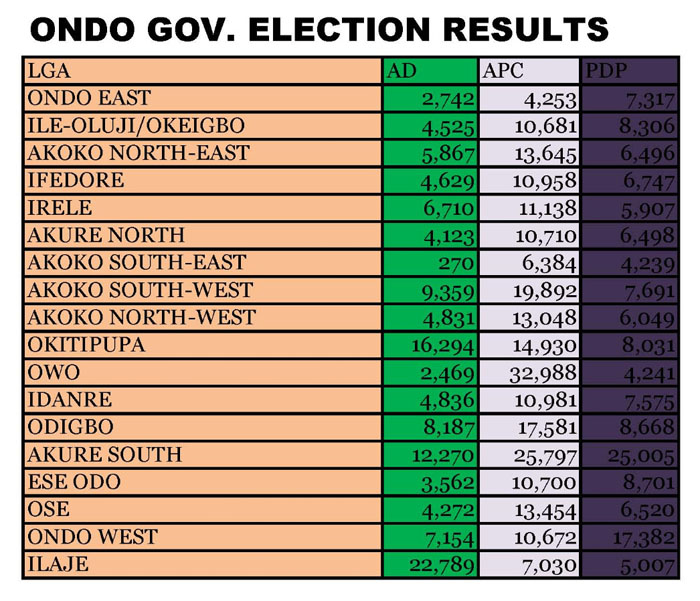
#ONDODECIDES: APC WINS ONDO GOVERNORSHIP ELECTION
VP OSINBAJO AND HIS WIFE DOLAPO, ATTEND FORMULA ONE EVENT IN ABU DHABI
Federal Government to construct pipelines from Niger Republic to Kaduna Refinery to curb militancy and vandalism
The federal government has finalised plans of the construction of a 1,000 kilometer crude oil pipelines from Niger Republic to Kaduna Refinery.
This move was decided following the continued difficulty of transporting oil from the Niger Delta region to the Kaduna refinery due to the activities of militants and oil saboteurs.
According to Vanguard, Dr. Maikanti Baru who is the group managing director of the Nigerian National Petroleum Corporation (NNPC) spoke at a town hall meeting with management and staff of the Kaduna Refinery and Petrochemical Company (KRPC) in Kaduna.
Baru said: “Due to challenges with the aged refinery and crude oil pipelines that had been breached severally, the operations of the refinery has been epileptic. This we are determined to resolve through various intervention methods, including evaluation of alternative crude oil supply from Niger Republic through building of a pipelines of over 1, 000 kilometers from Agadem to Kaduna. That effort is being championed by Mr. President himself.”
“It was important to explore alternative crude supply to KRPC, which has been affected by vandalism of pipelines and obsolescence, assuring that the initiative will reduce downtime of the plant and ensure optimal utilisation.
“The Corporation has already started engagements with the Nigerien Minister of Petroleum and the Chinese that are operating the field at Agadem (The Agadem Block is located in the East Niger Rift Basin)”
Baru promised that he would ensure the energy supply project to power industries in Kaduna is made possible with the completion of the Ajaokuta-Abuja-Kaduna-Kano (AKK) gas pipeline.
Power shortage will become a doom's day scenario if not handled properly - NERC Boss
“This is like a doom’s day scenario because if care is not taken, shortfall in power sector will hit N3 trillion by end of 2016. The reason is lack of revenue attributed to the services provided but don’t get paid for”, he said. In October, Nigeria Electricity Hub, an initiative of Nextier Power, said that the Nigerian electricity supply market will record an estimated N1 trillion shortfall by December 2016, which could lead to systemic bankruptcy and a risk of nationwide blackout if left unresolved.
The CEO of Niger Delta Power Holding (NDPHC), Chiedu Ugbo, also stated that since the establishment of the company’s first power plant in 2011, estimated energy invoiced by the eight power plants currently amounted to N235.4 billion. Of this estimate, about 55.3 percent, he explained, has been paid while the remaining 44.7 percent is still outstanding and owed by the Discos, and as of August 2016, debts owed the company by the market stood at N105 billion. “The implication is far reaching: capacity utilisation, low productivity, inability to meet obligations, asset replacement issues and finally it challenges them as a going concern,” the NDPHC boss said.
While speaking, Antony Akah described the huge shortfall as a “doom’s day scenario”, saying it came about as a result of services rendered by the different strata of the sector yet-to-be paid for by consumers. He mentioned power theft, metre by-pass, unpaid bills as some of the causes for the shortfall. He then explained that power loses are usually estimated and added to the bills/tarrifs of those customers with metres.
The Chief Executive Officer, Association of Nigerian Electricity Distributors (ANED), Azu Obiaya, had earlier assessed the liquidity challenge from the perspective of the Discos. Discos are experiencing a revenue shortfall of N38 billion monthly and that the government alone, through its ministries, departments and agencies (MDAs), currently owes the Discos about N58 billion, he said. This, the ANED CEO said, could amount to N309 billion by the end of the year, and that the Discos’ books no longer reflect cash flows that were necessary for lenders to accept funding their ongoing projects.
He also noted that as of December 2015, the Discos were experiencing a revenue shortfall of N298 billion due to the non-cost reflectivity of MYTO.0, a tariff plan then in force in the power sector in Nigeria.
As a result of this, the NERC approved electricity tariff increases to raise liquidity for the sector but its implementation was suspended for about six months, resulting in losses of about N13 billion for the Discos. Apart from these, other losses are coming through inflation of the naira and its weakness against major international currencies as well as from pipeline vandalism.
Senate makes dramatic turn as it drops the name of Buhari's successful nominee for commissioner of NCC
Obono-Obla’s name was removed in the letter transmitted to Buhari as one of those confirmed by the legislature.
In the letter dated November 22, signed by Senate President Bukola Saraki, a copy of which was obtained yesterday, Obono-Obla was listed as one of the three whose nominations were rejected by the Senate.
It would be recalled that Oboni-Obla was among the five whose nominations by President Buhari were approved by the Senate on November 17, 2016, while two of the nominees were dropped.
At the plenary, those whose appointments were confirmed were Senator Olabiyi Durojaiye (Chairman/Ogun/South-West), Senator Ifeanyi Ararume(Non- Executive Commissioner/Imo/South East), Sunday Dare (Executive Commissioner, Stakeholders Management/Oyo/South-West), Okoi Ofem; Obono-Obla (Non-Executive Commissioner/Cross River/South-South) and Clement Omeiza Baiye (Non-Executive Commissioner/Kogi/North-Central).
The lawmakers, however, dropped Aliyu Abubakar (Non-Executive Commissioner/Bauchi/North-East) and Pastor Ezekiel Yissa (Non-Executive Commissioner/Kwara/North-Central).
According to the report of Senator Gilbert Nnaji led Committee on Communications, Pastor Ezekiel was rejected because of his background as a nursing officer.
The second nominee rejected by the Senate, Alitu Abubakar, had repeatedly called for the scrapping of the Senate, even when he appeared before the Senate for screening, saying the existence of the Senate was not justifiable.
He also pointed out that the upper chamber was only wasting the nation’s resources by its existence.
Obono-Obla, who is the Special Assistant to the President on Prosecution, attached to the Ministry of Justice, protested in an email sent yesterday against what he described as back-door removal.
The mail was titled, Can the Senate President unilaterally overrule the confirmation of a nominee by the Senate?
The nominee, who asked why he was removed after the Senate had confirmed his nomination, simply said: “The entire major electronic and print media organs in the country, on November 17 and 18, 2016, carried the confirmation by the Senate of the Board of Nigerian Communications Commission.
“Surprisingly and curiously, the Senate President, Senator Abubakar Bukola Saraki, in a letter dated November 22, 2016, to President Muhammadu Buhari, titled ‘Confirmation of Appointments,’ falsely stated that the Senate did not confirm the following nominees: Aliyu Saidu Abubakar; Pastor Ezekiel Yissa and Chief Okoi Ofem Obono-Obla.”
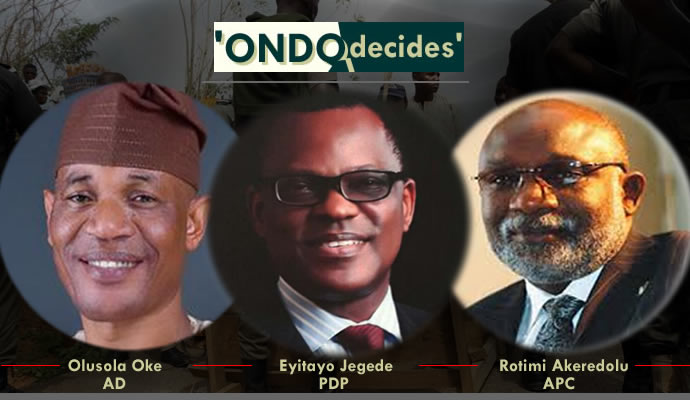
Why PDP lost to Rotimi Akeredolu's APC - Sen. Buruji Kashamu
Kashamu, in a statement signed by him, said that no one should mistake the pronouncements of the Court of Appeal and the Supreme Court over the Ondo State PDP governorship ticket as their judgments on the party’s national leadership crisis.
He said that the refusal of the Governor of Ondo State, Dr. Olusegun Mimiko, to listen to advice on where his successor should come from worked against him and the PDP during the election.
Kashamu said, “We told Governor Mimiko that after eight years in office, the good people of Ondo State would resist the injustice of producing a successor from the same senatorial district where he hails from.
“It is not that Jegede is not a good material. He is urbane, intelligent and smart. He would have probably won had he come from any other senatorial zone than Mimiko’s.
“We told Mimiko that the people would not take anything that would look like a third term for him and his senatorial district. He would not listen.
“ Mimiko turned deaf ears to wise counsel, just like he turned his back on all those who helped him to power.
“Despite being the Chairman of the PDP Governors’ Forum, Mimiko turned himself into Fayose’s puppet, allowing Fayose to lead him by the nose.”
On the claim by the spokesman for the National Caretaker Committee of the PDP, Prince Dayo Adeyeye, that the party would impose severe sanction on Sheriff and members of his faction, Kashamu said such action would fail.
But he said that neither he nor any member of the faction was afraid of such impending sacrifice since, he said, they were fighting for the interest of their people.
He said, “”No one is afraid of any sanction so long as we know that we are fighting to protect the interest of our people.
“A political party is a congregation of people with a common goal yet with various interests. In every political setting, people align and realign with the bloc or group where they feel their interest is better protected and guaranteed.
“If your bloc or group wins, it does not mean you should seek to emasculate the other because you never can tell what would happen tomorrow.
“I wish to advise that no one should mistake the verdicts of the Court of Appeal and the Supreme Court over the Ondo State PDP governorship ticket as their pronouncements on the national leadership crisis.
“They are two separate issues that I hope we can still resolve amicably. Anyone talking of sanctioning any member of the party for fighting to protect his interest does not wish the party well.”
He said that the gale of sanctions in Osun, Ogun and Kwara states would further exacerbate the crisis in the party, adding, “the truth is, such a move that will further undermine the party and its leadership.
“Is anyone saying that if tomorrow the Court of Appeal and the Supreme Court rule in favour of any of the national leaders, he should send all those in support of the other out of the party when all the 36 states are polarised along the lines of Senators Sheriff and Makarfi? No. That is not the spirit of party politics and participatory democracy.”
Sunday, November 27, 2016
30 Million Bank Accounts Abandoned By Nigerians.
The total number of inactive bank accounts in Nigeria stand at 30.26 million despite efforts by banks to retain old customers and attract new ones.
The accounts, activated by commercial banks for new holders but later abandoned to dormancy by the customers now constitute 32.42 per cent of the total 94.388 million activated bank accounts in the country.
Consequently, only 64.128 million accounts that represent 68.7 per cent of the total activated accounts domiciled in commercial banks are functional.
According to the latest industry statistics obtained by Daily Trust from the Nigerian Inter-Bank Settlement System (NIBSS) Plc over the weekend, the growing wave of new, active and dormant accounts across savings and currents account types in the country has been progressively steady.
Giving the year-to-date (YTD) analysis of the latest report up till October this year, NIBSS indicated that a total of 4.13 million accounts have become dormant within the period, jacking up dormant account base to the current figure from 26.042 million it stood at the end Q4, 2015.
NIBSS further stated that from a figure of 85.018 million accounts in December 2105, total account base in the country has grown by 11.02 per cent as 9.37 million new accounts were activated within the period.
In its breakdown, 30.063 million, 2.896 million and 2.365 million new accounts came on board in Q1, Q2 and Q3 2016 respectively, while in October, the figure maintained the upward momentum by 1.12 per cent as 1.046 million new accounts were recorded in the month alone.
Meanwhile, further analysis data revealed savings accounts as constituting the largest chunk of the total activated bank accounts as it stood at 66.255 million while current accounts are just 25.58 million.
Experts have also warned that Nigerians, who make use of dormant bank accounts, should not throw caution to the wind as the account might generate debt.
A customer, who preferred not to be named, recounted her ordeal with one of Nigeria’s leading banks, saying “My dormant bank account generated a debt which kept growing overtime, so, one must be careful.”
According to Investopedia, a dormant account has had no activity for a long period of time, other than posting interest and a statute of limitations usually does not apply to it, so funds can be claimed by the owner or beneficiary at any time.
However, it will be recalled that until a new dormant account management policy was released by the Central Bank of Nigeria (CBN) late in 2015, commercial banks in Nigeria have always converted customers’ money in dormant accounts from liabilities to income of the banks. While the apex bank put an end to this standard by also directing banks to reverse such conversion of customers’ money made five years before the 2015 policy which was in favour of account holders, analysts said this must have also contributed to the growing rate of dormant accounts.
Source:
http://www.dailytrust.com.ng/news/business/nigerians-abandon-30m-bank-accounts/173512.html#f2r5GUdO8fr6mPY8.99